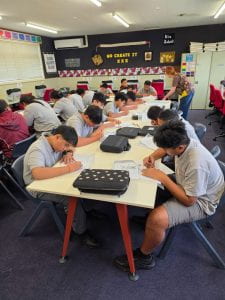
Today we went back to Tech, we had gotten split up into groups during the morning, there were 4 groups I’m assuming and I was in the group 8A my group were doing Text Tiles which is in other words Text Tiles also means sewing. When we got on the bus we headed our way to Tamaki College which is where our Tech takes place, we got out of the bus then formed into our groups and headed to our classes. As soon as we got into the class we all sat down then our teacher handed all of us a book a pencil and a rubber on the front of the page it had name and school. I wrote my school and my name then we turned the page it said we could design a bag for someone but on the page it said Person 1 to 4 and we had to write the four special people we were going to make the bag for out of the 4 people. So then I wrote my Mum, Dad, Myself and my friend who was suprisingly sitting next to me in class. After our Tech teacher announced that we have to do sewing exercises I’m not sure about how much paper excersices we had to use the sewing machine because the sewing machine had a cover so I uncovered it and put it on the back of my chair and then our teacher started to go through on how to use the sewing machine, it was fun because we got to learn about so much of the parts on and in the machine. While I was doing my excersices we had to follow along the line on the paper so it could make a masterpiece when you look at the back it would be just little dots on the back that made lines to create a masterpiece. After that we had to pack up and turn the sewing machine off and put the cover back on, then we had to place our books in plastic bags and seal them up so that they wouldn’t fall off. As a result we had to put them in the box until we come back till next week. This experience was something fun to come back to I loved this experience and I cant wait for other Year 7’s and 8’s to have this experience I hope they would love this. Here is some pictures of my class at Tech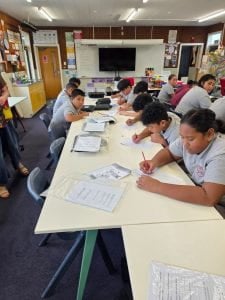
“Agent of Change”

Today we were challenged to make something called a vision board to help me reach my big goals for the year 2026. Basically, it’s a board or a poster that I put pictures, words, and symbols on. These images and words represent what I want to accomplish by that time. The idea is that seeing these things every day keeps me focused and inspired, reminding me of what I’m working toward. It’s like a visual map of my dreams and plans, so I don’t forget or lose track of them as time goes on.
Ko Wai Au

Kia Ora, my name is Fern and I’m about to finish my time at Panmure Bridge School. Im excited about what’s coming next and excited to try new activities and participate in school events. One of my main goals is to become more confident. I want to be able to speak up more in class and feel happier about trying new things, even if they are challenging or outside my own comfort zone. I also want to do well in all my subjects and put in my best effort all the time because I care about learning and improving. I know that working on these goals now will help me prepare for the next big step is moving on to college in 2027. I plan to keep challenging myself to learn more, get better at different skills, and get ready for next year. Im looking forward to what my future looks like and also I am determined to make the most of my last year at Panmure bridge school.
Octopus Oddities – Kick Start
 This piece of writing is about a school activity called the Summer Learning Journey. For the activity, we got to pick a picture of an octopus, which is a sea animal with eight arms. They could either color the picture online using a website called thecolor.com or print it out and color it with markers or colored pencils. I had picked a simple but cool-looking octopus picture so that coloring would be both fun and quick. During this activity, I learned interesting facts about octopuses. I found out that octopuses only live for a short time, usually between three and five years. They also learned that octopuses live on the bottom of the deep ocean, known as the deep sea floor. One of the most surprising facts they discovered is that each octopus has nine brains and three hearts. This was especially interesting to them because it is a unique characteristic of octopuses, showing how special and unusual these animals are. Overall, the activity was both fun and educational, helping me learning new things while being creative.
Legs Legs Legs? – Step it up
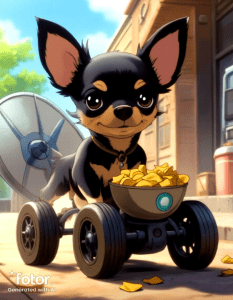
This activity was about helping Turbo, a small chihuahua, the LI was to get a new special device instead of riding in a simple trolley. Turbo was born without his two front legs, so he needs extra help. The goal was to pick and build a special upgrade that could do useful things for Turbo.
There were three main options to choose from:
1. The “Snack Dispenser 5000”: A machine that automatically gives Turbo treats whenever he wants one, so he can stay happy and well-fed without needing someone to give him snacks by hand.
2. The Auto-Cooling System: A device that keeps Turbo cool and comfortable, especially if he gets hot, so he doesn’t get too warm or tired.
3. The “Turbo Booster”: A gadget that gives Turbo a quick boost or a push to help him go faster or get from one place to another more easily.
We could build this new device on a computer using tools like Google Draw, Canva, Adobe Express, Tinkercad, or even draw it on paper. Once the design was made, we had to label different parts of our creation so everyone could understand what each part does.
I decided to combine all three ideas into one device. I imagined a machine that has a snack bowl that refills itself so Turbo always has treats nearby. Behind him, I put a small fan to keep him cool and comfortable. I also added electric wheels to his device that can make him go much faster than before, helping him move easily even without his front legs. This way, Turbo gets treats, stays cool, and can move quickly all in one upgraded, special device.
Legs Legs Legs? – Kick Start
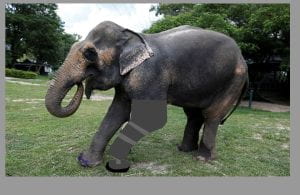
In the 2025 Summer Learning Journey in LS2, we worked on a project where we had to make a new leg for an elephant named Mosha. Mosha needed a new leg because her actual leg was broken or damaged. Our task was to create and design a custom-made leg specifically for Mosha. We focused on making the new leg fit perfectly and be comfortable for him, so we designed a special cast or support that would help him move better and feel better. We paid attention to the details and drawings on the leg to ensure it was just right for Mosha’s needs. This project helped us learn how to design supports and understand what animals might need when they are injured or have a disability.
Moment in Time
For Inquiry, I was challenged to create a google vid about my moment in time. For this activity I chose the Polyneisian Panthers because they had caught my attention and I wanted to learn more information about them like there backstory and how everything happened. In my Google Video, I included what happened, who was involved, where did it happen, why did it happen etc. One interesting fact I found out about the Polyneisian Panthers is that there wasn’t just pacifica people but also Maori and Cook Island people joined along with them before protesting, I enjoyed doing this challenge/activity because I got to show other people about them and share there story.
Day and Night AI Movie
For Inquiry today we were challenged to use our smart searching skills to research Day and Night, creating an AI video to show the process. We watched 2 videos that explained the Earth’s rotation and revolution, day and time. One full rotation of the Earth is one day, the part facing the light is a day and the part in shadow is night. I used PixVerse.ai to create the video that shows the earth rotating that is transferring from day to night by creating our own prompt. I enjoyed doing this activity because we get to use our skills to create a video by AI and also getting to know how time moves.
Ancient Timekeeping Devices
Today for this task we were challenged to create a Google video about the three old timekeeping devices that were used in the past which were Clepsydra, Sundial and Hourglass I had the Clepsydra. What is a Clepsydra? Clepsydra is an ancient water clock. It was a clever way people told time in the past, like the ancient Greeks and Egyptians, kept track of time using the steady flow of the water. Sundial is a ancient clock but it was also special it was the kind of clock that uses the sun to tell time. It works by using a stick or pointer called a gnomon to cast a shadow onto a flat plate with numbers on it. As the sun moves across the sky, the shadow moves to show the correct time of day. Finally Hourglass is a time measuring tool with two glass bulbs connected by a narrow neck, with sand that flows from the top to the bottom to show time passing. I really had fun doing this challenge/task I wish I could do it again.
Idioms
For this task we were challenged to make our own idioms. What is an idiom, an idiom is a sentence that isn’t real and is a figurative. My idiom was Carry the weight of a wet sponge, which means “To be weighed down by an overwhelming or impossible task, especially one that feels like it will never be solved or completed”. One thing I found intersting about this fun challenge is that we use idioms but don’t know when we use them.